
Thermal Imaging (Infrared)
The camera sees
through the drywall.
Not literally — but it reads surface temperature, and temperature is how hidden moisture, missing insulation and overheating electrical connections give themselves away.
Book this inspection Call (224) 400-1006
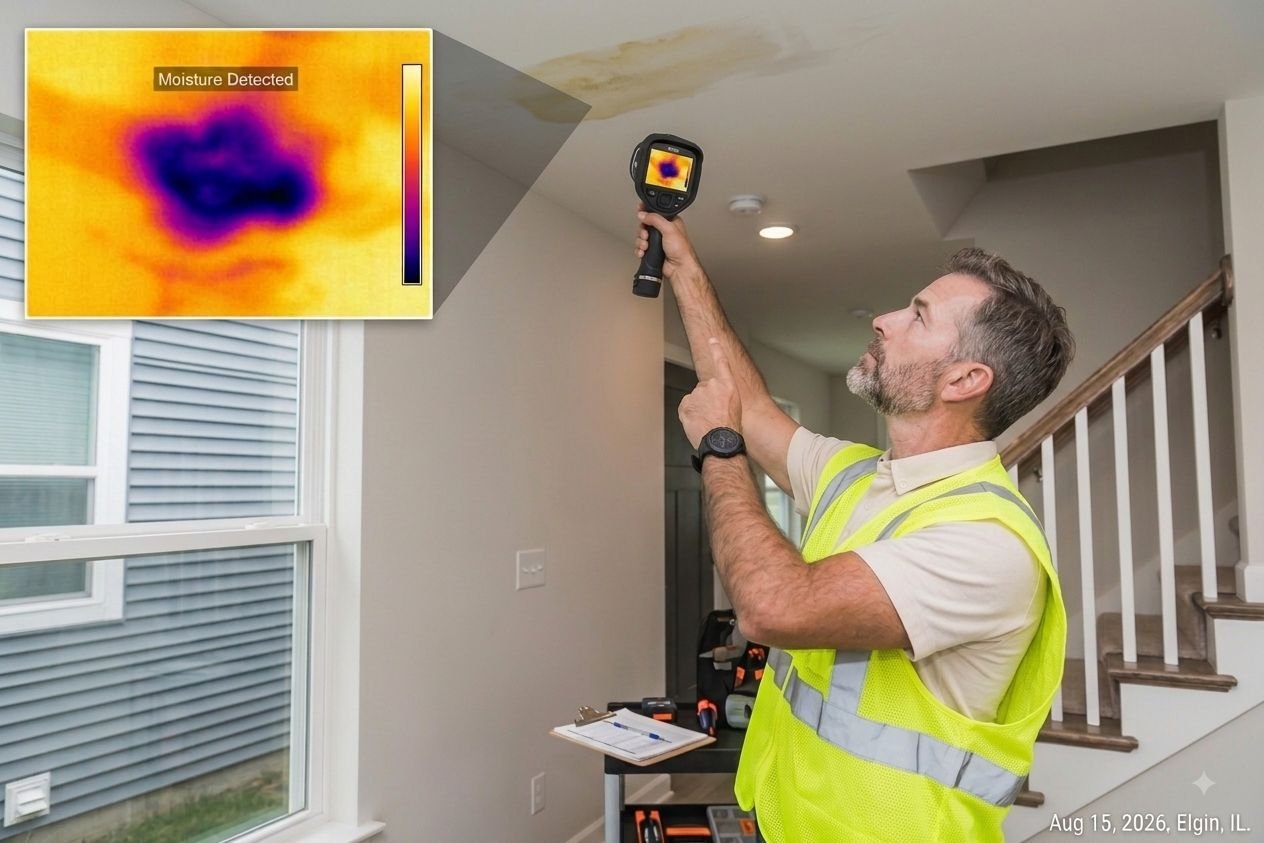
A standard home inspection is visual. If a pipe has been leaking slowly inside a wall cavity for six months and the drywall hasn't stained yet, a visual inspection will not find it. An infrared camera will — because evaporating moisture makes that patch of wall measurably cooler than the wall around it.
Infrared doesn't diagnose on its own. It shows a temperature anomaly, and then we investigate: a moisture meter confirms whether a cool spot is actually wet, and context tells us whether a warm spot at the panel is a loose connection or just a hard-working circuit. The camera tells us where to look, not what to conclude.
It is included with every inspection at no extra charge. It isn't an upsell at the door.
Included
What infrared reveals
- Active plumbing leaks inside wall and ceiling cavities
- Roof leaks tracking down framing before staining appears
- Moisture intrusion at windows, doors and foundation walls
- Missing, settled or poorly installed insulation
- Air leakage at rim joists, top plates and penetrations
- Overheating breakers and loose electrical connections
- Radiant heat loops and their coverage
- Blocked or disconnected HVAC supply ducts
- Ice dam vulnerability at eaves and valleys
- Pest and rodent nesting in insulated cavities
Context
Why it matters on Illinois homes
Winter is the ideal condition for infrared. A large temperature difference between inside and outside makes insulation gaps and air leaks show up vividly — which is why a January inspection often produces the most useful thermal images of the year.
It's also how you catch ice dam risk before it becomes roof damage. Warm air escaping into an under-insulated attic melts snow at the ridge, that meltwater refreezes at the cold eave, and the resulting dam pushes water back under the shingles. The thermal image shows the heat loss pattern that causes it, months before the damage appears.
And on any home with a finished basement — common across the Fox Valley — infrared is often the only practical way to check for moisture behind finished walls without opening them up.
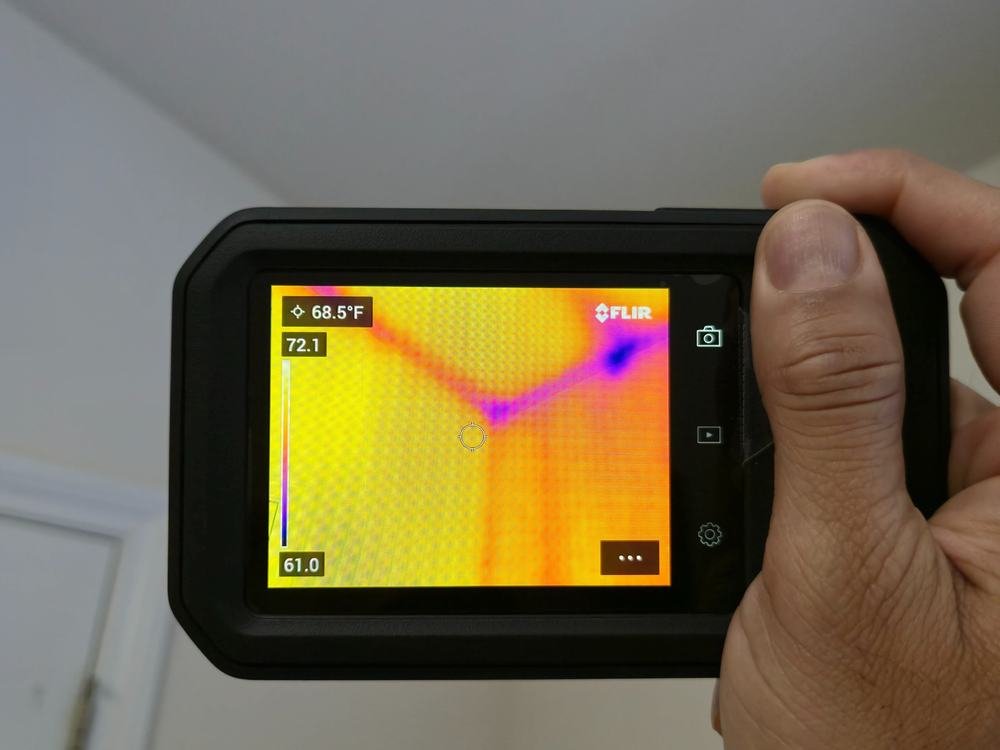
A cold anomaly on a ceiling, invisible in normal light
Real scans
What the eye misses.
Both of these are actual infrared captures from Syte inspections. In normal light, neither surface looked like anything at all.
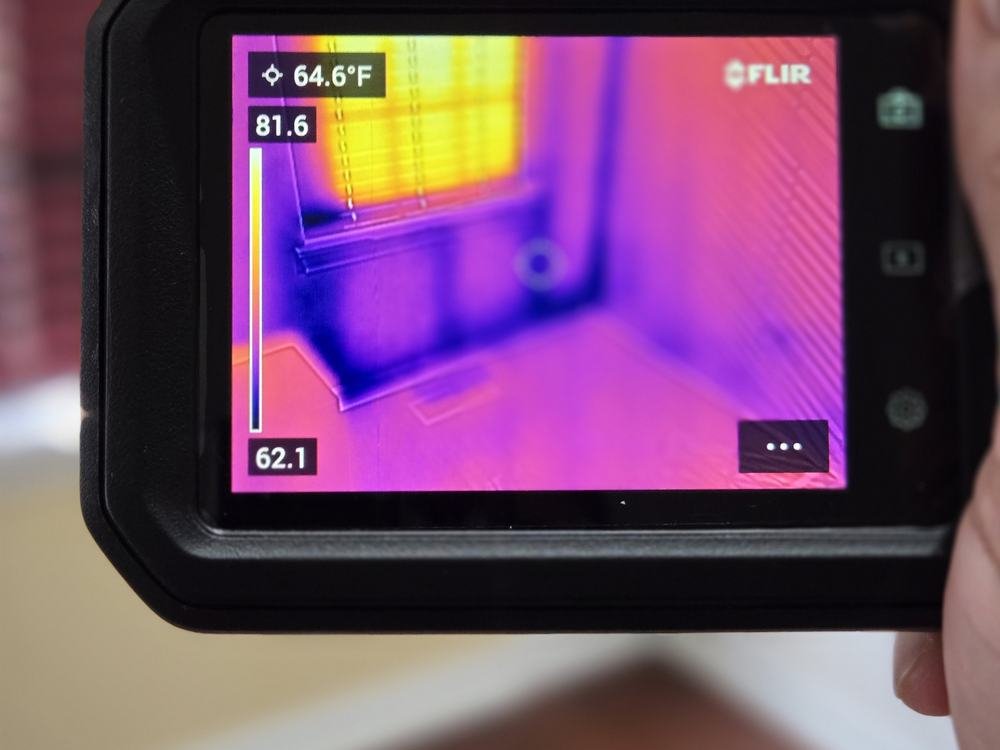
The camera finds it; the meter confirms it. Infrared shows a temperature difference, not a diagnosis. Every anomaly is checked with a second method before we call it moisture — which is why our reports don't send you chasing problems that aren't there.
Questions
About thermal imaging (infrared)
Is thermal imaging included or extra?
Included. The infrared camera is part of our standard kit and is used on every inspection wherever it helps — there is no separate charge for it, and no add-on to decline.
Can it see inside walls?
No. It reads surface temperature only. What it detects is the thermal signature that conditions behind the surface create — which is why every anomaly gets confirmed with a second method before it goes in the report.
Does it work in summer?
Yes, though the ideal condition is a meaningful temperature difference between inside and outside. Moisture detection works year-round; insulation assessment is sharpest in winter.
Also consider
Pairs well with
Pre-Purchase (Buyer's) Inspection
The pre-purchase inspection is the one chance you get to look at a home with a professional, unemotional eye — whi…
Learn more ›Radon Testing
Kane, DuPage, McHenry and most of northern Illinois sit in EPA Radon Zone 1 — the highest-risk designation in the …
Learn more ›Pre-Listing (Seller's) Inspection
The same defect discovered by your inspector is a repair you schedule. Discovered by the buyer's inspector, it's a credi…
Learn more ›Book an inspection
Book a thermal imaging (infrared).
We'll confirm today.
Closing on a deadline? Call and say so — we hold evening and weekend slots for contingency windows.